Every few months, a new tool promises to fix the way we work.
It arrives with a polished homepage, a clever workflow, and the quiet suggestion that our current system is the problem. For a moment, it works. A fresh interface can make everything feel possible.
Then the novelty fades.
The real test begins when the project gets messy, the week gets crowded, and the tool has to be useful without being exciting.
What Makes a Tool Last?
A lasting tool usually does one or two things well.
It opens quickly.
It saves reliably.
It does not punish imperfect use.
It helps you resume work without rebuilding the system.
It makes the next step easier to see.
That sounds simple because it is. Most good tools are not trying to transform your life. They are trying to remove one small layer of friction.
My Current Toolkit
This is the kind of setup I keep coming back to:
| Tool | What it’s for |
|---|---|
| Notes app | Capturing fragments before they disappear |
| Plain writing app | Drafting without too much interface |
| Calendar | Appointments and deadlines |
| Weekly task list | Deciding what actually matters now |
| Physical notebook | Thinking away from screens |
| Publishing platform | Turning finished ideas into posts |
None of these tools are impressive on their own. Together, they create enough structure to keep moving.
Ghost gives independent writers a clean place to write, publish, send newsletters, and grow a membership around their work.
The Three-Question Test
When I’m deciding whether a tool still belongs in my life, I ask:
- What job does this tool actually do?
- Would I choose it again today?
- What gets harder if I remove it?
The third question is the most useful. If nothing meaningful gets harder, the tool is probably clutter.
Objects Count Too
Not every tool needs an account.
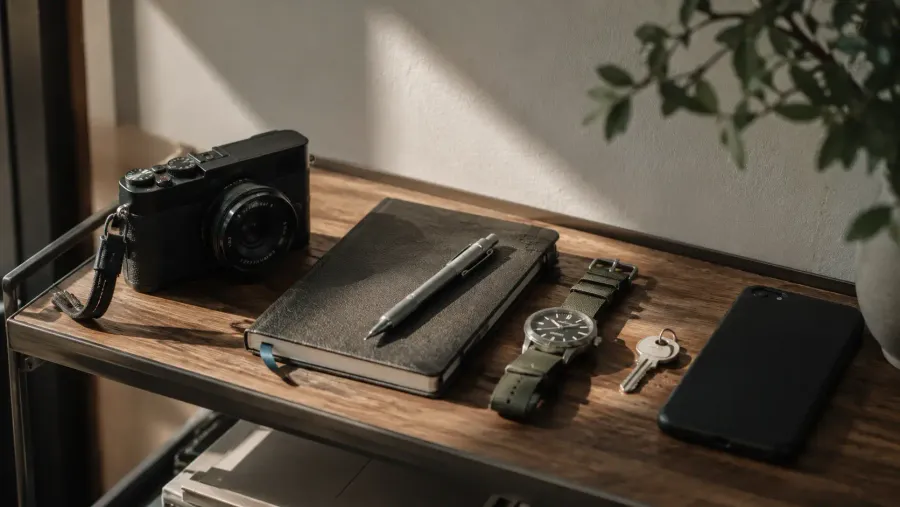
A good pen, a small lamp, a camera you actually carry, a chair that helps you sit a little longer: these things shape work too. Sometimes they matter more because they do not ask for updates, logins, or new habits.
They simply wait until needed.
A Small Rule
I try not to adopt a tool unless I know where it fits.
Not vaguely. Not because it seems promising. Specifically.
If a tool cannot answer “what job do I do?” in one sentence, I usually leave it alone.
The tools that stay are rarely dramatic. They become familiar, almost invisible, and that is their strength.
They do not replace discipline, taste, or attention. They just make those things a little easier to practice.